


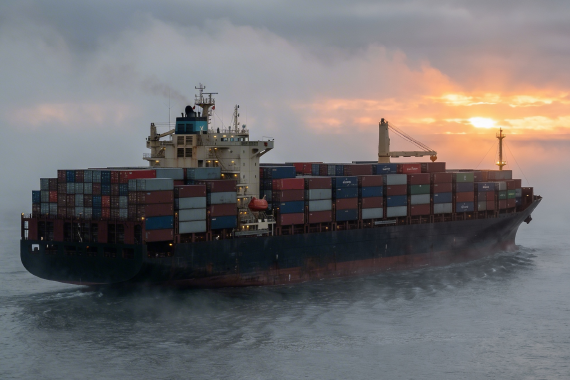
For procurement teams and facility managers within the industrial and commercial cooling sector, the cost of moving heavy equipment and specialized refrigerants has historically been treated as a highly predictable line item. Budgeting for freight involved calculating standard base rates and adding a modest contingency for minor fuel fluctuations. That era of predictable logistics planning has concluded. The most recent quarterly forecasting derived from the TD Cowen and AFS Freight Index argues forcefully that normal logistics volatility is now structurally embedded within the global supply chain. The central assertion presented by the Q1 2026 cycle is that procurement planning must permanently assume that freight pricing power remains sticky. Consequently, supply chain risk management must be explicitly designed for persistent friction rather than anticipating any rapid reversion to pre 2020 shipping dynamics.
The TD Cowen and AFS Freight Index provides predictive pricing models for truckload, Less Than Truckload, and parcel shipping segments by utilizing extensive AFS shipment data and advanced modeling techniques. The underlying reference materials for the Q1 2026 index coverage were published in mid January 2026 across multiple outlets. The data clearly indicates that major carriers have successfully learned to sustain rigid pricing discipline even during periods when overall market demand is mixed. This represents a fundamental shift in the balance of power between shippers and carriers. Carriers are no longer chasing volume by offering steep discounts. Instead, they are prioritizing yield management and aggressively protecting their profit margins regardless of macroeconomic headwinds.
A key quantitative signal publicly reported for the Q1 2026 cycle includes a continued elevation in Less Than Truckload indices. For the commercial cooling sector, which relies heavily on Less Than Truckload freight to transport bulky replacement parts, specialized compressors, and pallets of refrigerant cylinders, these elevated indices directly erode maintenance budgets. Furthermore, the index commentary highlighted significant developments regarding parcel general rate increases and increasingly complex surcharge structures. The crucial lesson for facility operators is that cost drivers now extend far beyond simple base rates into dense, often opaque accessorial structures and compounding surcharges. The base rate quoted by a carrier is simply the starting point of the negotiation, while the final delivered cost is heavily dictated by fuel surcharges, peak season fees, and specialized handling requirements.
This environment of structurally embedded friction and sticky pricing was thoroughly documented in January. However, the fragility of this high cost equilibrium was severely tested mere weeks later. Since March 2026, events tied to Iran and USA hostilities materially amplified the tight market narrative by adding a massive geopolitical shock to shipping access, marine insurance availability, and global energy prices. The geopolitical conflict acted as an aggressive accelerant, pouring highly volatile fuel onto a logistics market that was already characterized by extreme carrier pricing discipline.
The event chain most relevant to industrial supply chains began just before March, when Israel and the US launched coordinated attacks on sites in Iran, after which maritime war risk conditions tightened rapidly. In early March, multiple marine insurers and protection and indemnity clubs moved from heightened risk to explicit coverage cancellations and exclusions. A Gard member circular dated 1 March 2026 stated it received reinsurer cancellation notices for war risks in Iran and the Persian and Arabian Gulf, triggering a cancellation effective 5 March 2026. Reinstatement of coverage was only offered with a strict exclusion for specified waters, namely Iranian waters and the Persian and Arabian Gulf and adjacent waters as defined.
Parallel notices and updates from other clubs reinforce that this sudden withdrawal of insurance coverage was market wide rather than idiosyncratic. Skuld issued a general notice of cancellation for war risk cover, the Swedish Club added and expanded Listed Areas of Perceived Enhanced Risk, and West P and I issued a notice of cancellation in respect of certain war risks for non mutual war risk business. Reuters reported the severe practical supply chain meaning of those insurance actions. Following the war risk cover cancellations effective 5 March, tankers were damaged, a seafarer was killed, and approximately 150 ships were stranded around the critically important Strait of Hormuz.
Labor and industry bodies also rapidly escalated their risk designations. A joint statement by the International Transport Workers Federation and the Joint Negotiating Group designated the Strait of Hormuz, Gulf of Oman, and Persian Gulf a Warlike Operations Area on 5 March 2026, explicitly noting the hundreds of vessels stranded and the continuing and heightened threat. Following these events, Reuters reported sharply higher shipping costs on key routes, with some indicators reported as near tripling on a key route.
For cooling industry procurement professionals, the most direct transmission mechanism from this Middle Eastern conflict into their supply chain is not necessarily Iran as a manufacturing origin. The actual transmission mechanisms are the restricted access and extreme risk pricing for a critical maritime choke point, the lack of availability and high cost of war risk cover buybacks for vessels transiting the region, and the severe knock on fuel and freight rate dynamics. These dynamics feed directly into the final delivered cost and project lead time even for cargoes that are not destined for the Middle East.
When marine insurers cancel war risk cover or impose strict exclusions for key waters, the practical outcome is fewer vessels willing or able to transit, far more rerouting and anchoring, and incredibly sharp cost increases. Even where commercial cooling equipment or specific bulk refrigerants do not physically ship on those disrupted tanker routes, the exact same energy and insurance shocks propagate deeply into broader global freight markets. This widespread propagation occurs rapidly through surging fuel costs, chaotic equipment repositioning as shipping containers end up in the wrong ports, and highly aggressive carrier risk pricing.
Energy markets were violently whipsawed by this sudden escalation. Reuters reporting indicates that crude prices surged to around four year highs near 120 dollars per barrel during the conflict period, with major energy companies heavily flagging the direct operational impacts. Although an announced ceasefire on 7 April 2026 was associated with a sharp, immediate oil price drop, continued market fragility was widely noted by industry analysts. This massive energy price volatility feeds directly into the accessorial structures and surcharges highlighted by the TD Cowen and AFS Freight Index. The base rates may remain sticky, but the fuel surcharges layered on top of them expand rapidly, completely destroying facility maintenance budgets and project capital expenditure estimates.
Industrial and commercial cooling projects are exceptionally sensitive to long lead items. Facilities require highly specialized compressors, custom engineered heat exchangers, variable frequency drives, and intricate control panels to maintain operations. Independent industry reporting in adjacent heating, ventilation, and air conditioning supply chains indicates significantly longer lead times in key materials such as galvanised steel. Buyers are reporting average lead times hovering around seven weeks, with some delays pushing to nine weeks. This structural delay directly affects the fabrication of critical air handling units, weatherized enclosures, and specialized plant components.
Furthermore, where facility controls and variable frequency drives depend heavily on semiconductors and electronics supply chains, the conflict driven energy and logistics disruptions add substantial risk to already strained electronics inputs. Recent reporting connected the Middle East disruption to broader component price and lead time rises, including vital printed circuit boards and plastic materials. This signals an elevated level of risk specifically for electronically dense building systems and industrial controls when global supply chains destabilize.
Contractual risk has also risen dramatically across the logistics sector. Legal and insurance analysis highlights immediate contractual exposure for shipowners and charterers under English law concepts such as safety obligations and war risks clauses. This legal reality reinforces the fact that logistics execution and pricing can change incredibly rapidly when a previously safe area becomes legally unsafe or is officially excluded by insurance policies. Procurement managers must now meticulously review the Incoterms and force majeure clauses in all their shipping contracts to understand exactly who bears the financial burden of these sudden, massive surcharges.
The intersection of these freight realities with tightening environmental regulations creates a perfect storm for end users. In the European Union, the quota system progressively reduces hydrofluorocarbons placed on the market, supported by massive enforcement and customs integration. The added quota payment requirement of 3 Euros per tonne carbon dioxide equivalent increases the all in cost base for quota bearing hydrofluorocarbon supply. In the United States, from 1 January 2026, owners and operators of covered appliances with a full charge of 15 pounds or more must manage strict leak repair clocks. The regulatory text explicitly sets a 30 day repair requirement, which becomes a hard operational constraint if parts or refrigerants are not obtainable quickly due to shipping delays.
The lesson derived from the Q1 2026 TD Cowen and AFS Freight Index, amplified by the March 2026 geopolitical shock, is absolute. Logistics must be treated as a highly managed service rather than a simple pass through cost. Facilities must structure their vendor contracts explicitly for surcharge volatility. Relying on spot market freight quotes or assuming that supply chains will magically normalize is a guaranteed path toward regulatory breaches, blown budgets, and severe facility downtime.
Navigating this highly complex environment of sticky freight pricing, massive marine insurance exclusions, and tightening compliance clocks requires an expert partner. Facility managers cannot be expected to master international shipping law, monitor the TD Cowen and AFS Freight Index, and manage complex chilling infrastructure simultaneously. AFS Cooling offers heavily documented capabilities that map directly onto this severe March and April risk landscape. AFS Cooling positions itself as a comprehensive, end to end refrigerant import and compliance partner.
When extreme freight disruption and unexpected war risk surcharges threaten your budget, AFS Cooling provides comprehensive supply chain and logistics management. The services offered by AFS include true end to end logistics support, completely organizing the transport of critical materials from the supplier directly to the importing country. AFS actively selects the most suitable and cost effective shipping methods while expertly managing cross border complexity and region specific F Gas requirements. By leveraging these capabilities, clients receive varied routing options, shipment timing optimization, and essential carrier coordination. This expert logistics design leads directly to heavily reduced schedule variance, extreme cost transparency, and a significant reduction in surprise surcharges.
Furthermore, AFS Cooling assists clients by providing explicit contingency planning and contract clause review. AFS helps design contracts addressing war risk and freight volatility, ensuring total clarity on surcharge pass throughs, precise Incoterms definitions, and legally sound force majeure triggers. AFS also assists with structuring parts availability extensions perfectly aligned with regulatory extension provisions, completely shielding your facility from the financial and legal fallout of international supply chain failures.
Contact AFS Cooling today to secure your physical supply chain, stabilize your freight costs, and protect your critical operations from ongoing logistics volatility.

