


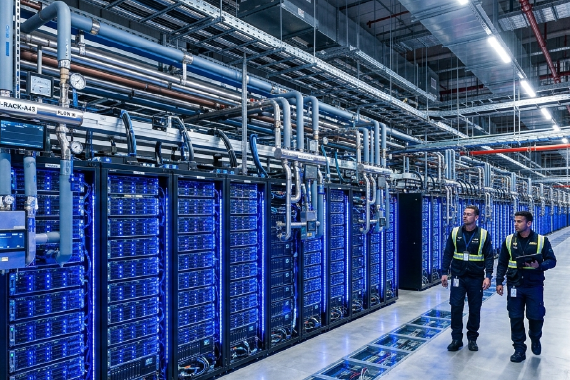
Industrial and commercial cooling operators currently face a severely restricted operating environment. The commercial cooling sector was already navigating a tighter and heavily compliance driven landscape. This environment resulted directly from accelerated refrigerant phase downs and stringent new regulatory obligations in both the European Union and the United States. In addition to these regulatory hurdles, the industry faced severe supply chain friction concentrated heavily in new era refrigerants and their related packaging and logistics. Furthermore, there is a rapidly rising demand for mission critical cooling, notably within large scale data centres, alongside a continuing shift toward complex liquid cooling architectures.
Since March 2026, severe geopolitical events tied to hostilities between Iran and the United States materially amplified this tight market narrative. This international conflict added a massive geopolitical shock to global shipping access, marine insurance availability, and worldwide energy prices. For end users of industrial and commercial cooling systems, these combined pressures translate directly into much higher delivered costs and massive volatility in both capital and operational expenditures. Facility managers also face longer and far less predictable lead times for certain components and refrigerants. Operating a commercial facility successfully now requires building profound supply chain resilience and deploying dedicated mitigation strategies.
Building resilience requires a clear understanding of the specific risk drivers impacting the physical supply chain. In early March of 2026, multiple major marine insurers and protection and indemnity clubs issued explicit war risk cancellation notices and rigid coverage exclusions. These sweeping coverage cancellations directly affected Iran, Iranian waters, and the Persian and Arabian Gulf alongside adjacent waters. Consequently, the critically important Strait of Hormuz was subsequently treated as a Warlike Operations Area by powerful labour and industry bodies. Reuters reported that ships were left stranded and shipping costs on key maritime routes increased sharply.
The practical supply chain meaning of these insurance actions was immediate and severe. Reuters reported that war risk cover cancellations effective 5 March resulted in damaged tankers, a tragic seafarer fatality, and approximately 150 ships stranded around the Strait of Hormuz. Even where cooling equipment or bulk refrigerants do not physically ship on those disrupted tanker routes, the exact same energy and insurance shocks propagate deeply into broader global freight markets. This widespread propagation occurs rapidly through surging fuel costs, chaotic equipment repositioning, and highly aggressive carrier risk pricing.
Global energy markets were also violently whipsawed by this sudden escalation. Reuters reporting indicates that crude prices surged to around four-year highs near 120 dollars per barrel during the conflict period, with major energy companies heavily flagging the direct operational impacts. This extreme volatility in energy prices directly affects chemical manufacturing costs and global transportation overhead. Higher fuel costs feed directly into backup generator operating costs and routine maintenance logistics. Concurrently, higher electricity prices can materially increase cooling operational expenditures, especially for large scale data centres and industrial process cooling users.
While navigating global shipping crises, facility operators must also manage rapidly expanding compliance workloads. In the European Union, end users and service providers face structural scarcity because the quota system progressively reduces hydrofluorocarbons placed on the market. The European Union introduced a new 3 Euro per tonne carbon dioxide equivalent quota payment. European Commission guidance states firmly that this payment applies starting with the 2026 quota, which is allocated and must be paid for during the 2025 calendar year. Payment is strictly required before any quota can be allocated to a stakeholder. This requirement does not by itself create the underlying physical scarcity, but it drastically increases the all in cost base for any quota bearing hydrofluorocarbon supply.
In the United States, from 1 January 2026, owners and operators of covered appliances with a full charge of 15 pounds or more face incredibly strict compliance obligations. These facilities must manage precise leak rate calculations, mandated repair clocks, specific verification testing, and extensive recordkeeping under the Environmental Protection Agency rules. The regulatory text explicitly sets a rigid 30-day repair requirement, or 120 days if an industrial process shutdown is required to complete the work. This compliance timeline becomes a hard, unforgiving operational constraint if the necessary parts or the specific refrigerant cannot be obtained quickly due to shipping delays or cylinder shortages.
The industry is actively experiencing an A2L transition bottleneck. Multiple sources describe significant shortages of R-454B in aftermarket cylinders, even when pre charged equipment remains fully available. Analysts attribute a large part of this friction directly to cylinder supply constraints and complex logistics. For end users managing strict compliance clocks, this cylinder shortage is a critical threat. It can instantly convert an otherwise routine repair or service need into a massive downtime risk. It forces desperate emergency substitutions, complex scheduling changes, and severe compliance complications.
Facility operators cannot passively wait for these interlocking crises to resolve. Building supply chain resilience requires the active implementation of rigorous mitigation strategies. The first crucial mitigation strategy is the comprehensive redesign of procurement and inventory structures. Facilities must abandon spot buying and implement a structured procurement strategy utilizing forward buys and extensive multi sourcing. By anchoring their operations in solid quota and procurement capabilities, operators can secure alternative substitute planning and reliable inventory. A reclaimed first strategy serves as an exceptionally powerful tool in this environment. Utilizing reclaimed refrigerants directly mitigates the financial sting of the European Union quota payment and provides a critical buffer against the severe aftermarket cylinder shortages currently plaguing the United States market.
The second vital mitigation strategy revolves around rigorous compliance orchestration. Because the regulatory burden is now a highly material operating cost, companies must integrate their compliance activities directly with their procurement efforts. This involves creating complete documentation packs for all imports and maintaining perpetually audit ready records. Facilities must ensure tight coordination with certified technicians and vendors to track deadlines perfectly aligned with the United States leak repair clocks and European Union portal requirements. In the European Union, enforcement is increasingly front loaded directly to customs and digital portal checks. For end users and importers of pre charged equipment, this drastically elevates the importance of accurate declarations of conformity. Operators must possess the undeniable ability to demonstrate lawful quota coverage at the exact moment of placing the equipment on the market. If parts are delayed in the United States, managing the 30 day repair clock requires flawless documentation and timely action to file extension requests.
The third crucial mitigation strategy focuses on defensive logistics design and explicit contingency planning within commercial contracts. Facilities must establish contingency planning and contract clauses that specifically address war risk and severe freight volatility. Contracts must include total clarity on surcharge pass through mechanisms, precise Incoterms definitions, and legally sound force majeure triggers. Operators must also structure parts availability extensions perfectly aligned with regulatory extension provisions.
Industrial and commercial cooling projects are exceptionally sensitive to long lead items such as customized compressors, special heat exchangers, variable frequency drives, and control panels. Independent industry reporting indicates significantly longer lead times in key materials such as galvanised steel, with buyers reporting average lead times hovering around seven weeks, and some pushing to nine weeks. Furthermore, where facility controls and variable frequency drives depend heavily on semiconductors and electronics supply chains, the conflict driven energy and logistics disruptions add substantial risk to already strained electronics inputs. Recent reporting connected the Middle East disruption to broader component price and lead time rises, including vital printed circuit boards and plastic materials. This signals an elevated level of risk specifically for electronically dense building systems and industrial controls when global supply chains destabilize. Managing these extensive delays requires end to end logistics coordination and extremely rigorous vendor framework agreements.
Navigating this highly complex environment requires a dedicated partner. AFS Cooling offers heavily documented strengths specifically in quota management, comprehensive refrigerant procurement, compliance and documentation support, and end to end logistics. These distinct capabilities map directly onto the current risk landscape. AFS Cooling implements multi sourcing and strategic forward buying for constrained refrigerants, ensuring your facility maintains critical inventory buffers. AFS establishes tighter compliance controls for regulated imports and utilizes explicit contract and logistics design to manage insurance and freight surcharge volatility.
AFS Cooling serves directly as an importer of record, performing all necessary legal checks, ensuring accurate reporting to authorities, and vastly simplifying complex customs clearance. For clients struggling to clear imports, AFS delivers complete compliance and documentation packs that significantly reduce border holds and prevent severe penalties. Quota management support is described not only as holding quota but also providing vital buying and selling opportunities across multiple markets and advising on market developments and regulatory changes. This is directly relevant when quota is monetised by the European Union paid quota system, supply is heavily constrained by strict phase downs, and international logistics risk is rising exponentially.
AFS Cooling's robust refrigerant procurement services secure virgin, reclaimed, and recycled gases through a highly trusted global supplier network. This targeted global approach serves as a highly appropriate mitigation strategy for physical bottlenecks, such as A2L cylinder shortages and the widespread general scarcity of hydrofluorocarbons.
Furthermore, AFS Cooling provides comprehensive supply chain and logistics management. AFS directly organizes the transport of critical materials from the supplier to the importing country, actively selecting the most suitable and cost-effective shipping methods available. By expertly managing cross border complexity and region-specific F Gas requirements, AFS ensures that your critical supplies bypass disrupted shipping lanes.
Contact AFS Cooling today to completely transform your physical supply chain, automate your compliance documentation, and protect your facility from the crippling operational effects of geopolitical volatility and strict regulatory enforcement.

