


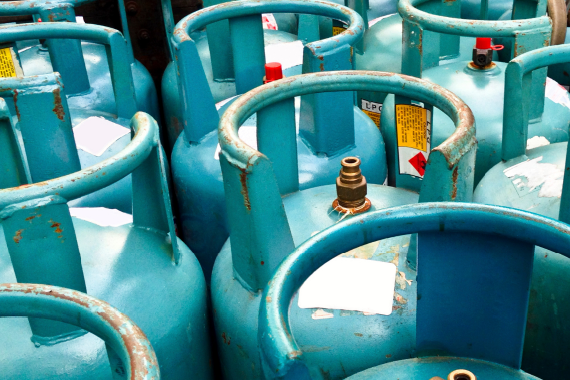
The commercial cooling industry is undergoing a profound conceptual transformation regarding how it procures its most vital operational component. Historically, facility managers and procurement teams viewed refrigerants simply as basic maintenance inputs. If a facility needed gas to run a chiller or a rooftop unit, the operator ordered it from a local distributor when the tank ran low. That era of simple, frictionless procurement has definitively ended. The aggressive regulatory caps imposed on hydrofluorocarbons have fundamentally altered the economic nature of these cooling gases. The industry is currently witnessing a massive paradigm shift where refrigerants are actively transitioning from simple inputs into highly volatile risk assets. This intense transition is driven directly by severe regulatory constraints that legally cap the amount of product allowed to exist within the market. The resulting concept of regulated scarcity has completely rewritten the rules of industrial facility management.
To fully understand this new environment, operators must look closely at recent developments within European financial markets. New European financial market instruments and standards are intended to make a regulated scarcity commodity much more legible and tradable. These sophisticated financial concepts link the physical cooling gas directly to the complex concepts of financial transparency and precise position reporting. By establishing standardized financial frameworks, the market acknowledges that the legal right to place hydrofluorocarbons into circulation is just as valuable, and just as subject to intense market forces, as the physical chemical itself.
Within this specific framing, the practical linkage for stakeholders in the industrial cooling industry is not necessarily that every single end user must suddenly become a financial trader. A hospital facility manager or a massive data center operator does not need to build a financial trading floor. However, they absolutely must recognize that price formation and availability constraints for refrigerants now increasingly resemble an emissions style market. The forces dictating whether a facility can secure enough gas to operate its chillers are no longer limited to just chemical manufacturing capacity. Price and availability are strictly dictated by government quotas, financial speculation, and widespread compliance hoarding. Because the industry now operates like an emissions market, complex forecasting, inventory strategy, and compliance documentation become deeply intertwined with everyday procurement and corporate risk management.
This financialization is explicitly grounded in the European Union revised F gas quota framework. The European Union market dictates a permanent structural scarcity because the quota system progressively and aggressively reduces the volume of hydrofluorocarbons legally permitted to be placed on the market. This quota system is heavily supported by enforcement and customs integration. The revised regulatory framework embeds an explicit monetary cost directly into the quota allocation process itself, a cost that remains completely distinct from the physical market price of the gas. The most operationally material element of this new regulation is the required 3 Euro per tonne carbon dioxide equivalent quota payment.
European Commission guidance states firmly that this payment applies starting with the 2026 quota, which is allocated and must be paid for during the 2025 calendar year. This rigid payment requirement is heavily enforced, as payment is strictly required before any quota can be allocated to a stakeholder. The legal basis is Regulation (EU) 2024/573, which applies from March 2024, with quota allocation related rules applying from 1 January 2025. While this 3 Euro fee does not independently create the underlying physical scarcity, it drastically increases the all in cost base for any quota bearing hydrofluorocarbon supply. It directly raises the working capital burden required to hold quota, effectively transforming a routine maintenance expense into a major capital allocation requirement.
The transition of refrigerants into risk assets is not solely driven by European legislative action. Since March 2026, severe events tied to hostilities between Iran and the United States have materially amplified the tight market narrative. This international conflict added a massive geopolitical shock to global shipping access, marine insurance availability, and worldwide energy prices. This unexpected geopolitical crisis added a second, highly disruptive scarcity channel, consisting of severe logistics and energy constraints, directly on top of the already existing quota driven structural scarcity.
In early March of 2026, multiple major marine insurers and protection and indemnity clubs issued explicit war risk cancellation notices and rigid coverage exclusions. These sweeping coverage cancellations affected Iran, Iranian waters, and the Persian and Arabian Gulf. The critically important Strait of Hormuz was subsequently treated as a Warlike Operations Area by powerful labor and industry bodies, and Reuters reported ships stranded and sharply higher shipping costs on key routes. Gard member circular, dated 1 March 2026, stated it received reinsurer cancellation notices for war risks in Iran and the Persian and Arabian Gulf, triggering cancellation effective 5 March 2026. Reinstatement required an exclusion for specified waters. Parallel notices from other clubs reinforce that this was market wide rather than idiosyncratic. Skuld issued a general notice of cancellation for war risk cover, while the Swedish Club added and expanded Listed Areas of Perceived Enhanced Risk.
The practical supply chain meaning of these insurance actions was immediate and severe. Reuters reported that war risk cover cancellations effective 5 March resulted in tankers damaged, a seafarer killed, approximately 150 ships stranded around the Strait of Hormuz, and sharply higher costs on at least some tanker routes. For clients attempting to procure physical cooling gases, this meant the freight capacity necessary to move the product was suddenly unavailable or prohibitively expensive.
Furthermore, global energy markets were severely whipsawed during this chaotic period. Reuters reporting indicates that crude prices surged to around four year highs, trading near 120 dollars per barrel during the intense conflict period. Major global energy companies publicly flagged the direct negative impacts on their production capabilities and financial operations. This extreme volatility in energy prices directly affects chemical manufacturing costs and global transportation overhead. Higher fuel costs feed directly into backup generator operating costs and maintenance logistics, while higher electricity prices can materially increase cooling operational expenditures. For end users of industrial and commercial cooling systems, these combined geopolitical and logistical pressures translate into much higher delivered costs and massive volatility in both capital and operational expenditures.
The dawn of emissions style markets and the harsh realities of a fractured global supply chain present a clear rationale for earlier engagement, longer term sourcing strategies, and structured procurement rather than spot buying. Purchasing refrigerant only when a critical system develops a leak is a guaranteed recipe for operational failure. The market now requires facility operators to treat refrigerant procurement as a heavily risk managed programme. This specialized program must feature strict corporate governance, highly accurate demand forecasting, comprehensive physical inventory buffers, and rigorous documentation discipline.
The structural scarcity defining the post hydrofluorocarbon era features much sharper price discontinuities between legacy gases and next generation refrigerants. Bottlenecks increasingly arise in the physical packaging and logistics phases, such as the severe lack of available steel cylinders, rather than solely in chemical production limitations. If a facility lacks a structured procurement strategy, it will remain entirely exposed to both the regulatory price hikes of the quota system and the physical product unavailability caused by global shipping crises.
To navigate this complex emissions style market, procurement professionals must deeply integrate their daily activities with facility compliance teams. The European Union enforcement mechanisms are increasingly front loaded directly to customs and digital portal checks. The European Commission stakeholder guidance strongly emphasizes F Gas Portal registration, complex customs declaration data requirements, rigorous reporting standards, and strict verification of quota conditions. If a company treats refrigerants as a simple mechanical input rather than a highly regulated risk asset, they are highly likely to fail these front loaded compliance checks. For end users and importers of pre charged equipment, this elevates the importance of declarations of conformity and the ability to demonstrate lawful quota coverage at the moment of placing on the market. This administrative failure leads directly to devastating customs delays, the absolute inability to place pre charged equipment or critical refrigerants on the market, and severe financial penalties.
Managing this incredibly complex web of financialization, regulatory quotas, and geopolitical shipping disruptions requires highly specialized expertise. Facility managers cannot be expected to master new European financial market instruments while simultaneously managing chilled water systems and tracking war risk insurance cancellations in the Middle East. AFS Cooling offers heavily documented capabilities explicitly designed to guide your operations securely through these unprecedented market shifts.
AFS Cooling functions as an expert end to end refrigerant import and regulatory compliance partner. Their core service lines are explicitly focused on comprehensive quota management, strategic refrigerant procurement, detailed compliance documentation, and robust supply chain logistics. To protect your facility against the severe financial pressures of the new European market realities, AFS Cooling provides expert quota management support. This specialized support is not simply limited to holding quota passively on your behalf. AFS actively provides critical buying and selling opportunities across multiple distinct markets and expertly advises clients on sudden market developments and regulatory changes. This strategic financial guidance is absolutely critical when quota is monetised by the new 3 Euro payment requirement, physical supply is heavily constrained by strict phase downs, and international logistics risk is rising exponentially.
To combat physical product scarcity, AFS Cooling frames its specialized refrigerant procurement services around sourcing virgin, reclaimed, and recycled gases through a highly vetted global supplier network. AFS rigorously evaluates international suppliers, expertly negotiates complex purchasing terms, and enables both one off emergency needs and long term security strategies. This targeted global approach serves as a highly appropriate mitigation strategy for specific physical bottlenecks, such as A2L cylinder shortages and the widespread general scarcity of hydrofluorocarbons. By integrating multi source procurement directly into your facility planning, AFS ensures that you possess the necessary risk assets to maintain continuous operations.
Furthermore, when marine insurers issue sudden war risk cancellation notices that threaten to strand your critical supplies, AFS Cooling steps in to execute precise logistics design. AFS organizes the physical transport of materials from the supplier directly to the importing country, actively selecting the most suitable and cost effective shipping methods available. By expertly managing cross border complexity and navigating region specific F Gas requirements, AFS Cooling completely maps its capabilities onto the severe shipping and insurance volatility witnessed since March 2026. This end to end logistics management provides reliable routing options, precise shipment timing optimization, and essential carrier coordination to bypass disrupted maritime lanes.
Contact AFS Cooling today to completely transform your refrigerant strategy from a vulnerable maintenance input into a fully protected, risk managed asset portfolio.

