


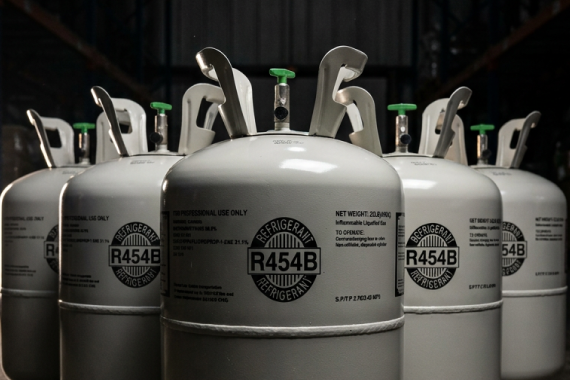
The global heating, ventilation, air conditioning, and refrigeration (HVAC-R) sector is undergoing a rapid transition as international frameworks, including the European Union F-Gas Regulation and the United States American Innovation and Manufacturing (AIM) Act, systematically phase down high-Global Warming Potential (GWP) hydrofluorocarbons (HFCs). To comply with these tightening regulations, manufacturers and building operators are actively adopting next-generation, mildly flammable A2L synthetic refrigerants. Prominent amongst these is R-454B, an A2L refrigerant blend designed as a lower-GWP replacement for R-410A in residential and commercial air conditioning units and heat pumps.
However, while equipment designed for R-454B is increasingly available from major manufacturers, a critical operational bottleneck has emerged in the aftermarket. Multiple independent industry reports highlight significant shortages and substantial backlogs specifically for R-454B supply in service cylinders. According to supply chain analytics in 2026, the price for R-454B has spiked to approximately 340 per cent above standard baseline levels.
Industry analysts attribute this market friction directly to cylinder supply constraints and complex cross-border logistics rather than a shortage of the chemical components themselves. Because A2L refrigerants are mildly flammable, they require specialised, pressure-rated cylinders and transport protocols that differ from legacy HFCs. The rapid growth in demand has outpaced the available cylinder infrastructure, leading to severe localized shortages.
This cylinder bottleneck presents an immediate, severe risk to commercial cooling operators and maintenance teams. Under stringent environmental rules, such as the U.S. EPA's HFC Management Rule (40 CFR Section 84.106), operators of systems containing 15 pounds or more of refrigerant must execute verified repairs within a strict 30-day timeline once a leak threshold is breached.
If a technician arrives to service a leaking system but cannot source the physical R-454B gas in portable cylinders, the compliance clock continues to run. This converts a routine maintenance event into an acute operational downtime and compliance risk, potentially forcing non-compliant chemical substitutions, costly emergency scheduling changes, or premature equipment retirement.
Navigating these physical and logistical bottlenecks requires a structured approach to chemical procurement and risk management. Relying on the volatile spot market for emergency cylinder replenishment is no longer a viable operational strategy. Businesses must instead establish long-term, proactive supply partnerships that ensure guaranteed access to critical transition gases.
AFS Cooling offers heavily documented capabilities designed specifically to mitigate these supply chain risks. Through a highly trusted global supplier network, AFS Cooling secures stable access to virgin, reclaimed, and recycled gases, providing an immediate solution to A2L cylinder shortages and general HFC scarcity. By helping clients design strategic inventory buffers and securing approved alternative refrigerants, AFS Cooling ensures that essential service lines remain fully operational.
Furthermore, AFS Cooling manages the end-to-end logistics process, serving directly as the importer of record and coordinating transport from global manufacturers to localised distribution hubs. By handling complex region-specific F-Gas regulations, customs clearances, and documentation requirements, AFS Cooling lowers the risk of border delays and shipping schedule variance. This level of supply security enables commercial operators to successfully navigate the A2L transition and protect their critical cooling assets.

