


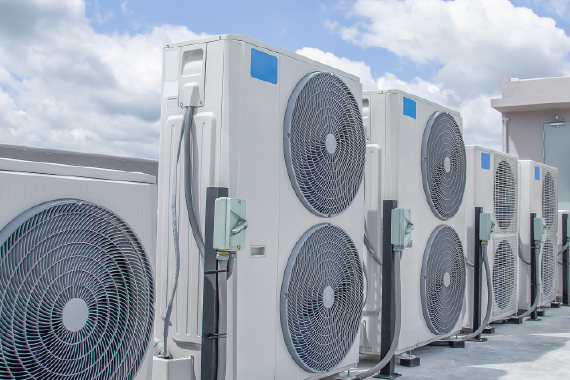
As record-breaking heatwaves sweep across Europe this summer, the continent's historical resistance to air conditioning is collapsing. Temperatures reaching 44.3 degrees Celsius in France, record June highs in the United Kingdom, and sustained heat across Spain and Italy have turned cooling from a perceived luxury into essential health and building infrastructure.
Major retailers and manufacturers across the European Union report unprecedented demand. In France, hypermarket operators sold tens of thousands of portable air conditioning units in single-day rushes, while major electronics outlets and e-commerce platforms reported double-digit to near 100 percent sales growth. Furthermore, trade data shows European air conditioner imports from major manufacturing hubs surged over 20 percent in volume in the first half of 2026 alone.
Industry association Eurovent projects that European household air conditioning ownership could exceed 100 million units by 2030. However, while this summer sales boom is a commercial win for appliance distributors today, it is quietly setting up a massive compliance bottleneck for 2027.
The cooling sector is currently operating on two distinct tracks:
• The Natural Transition (R-290): Environmental advocacy groups, including the Environmental Investigation Agency (EIA) and the European Heat Pump Association (EHPA), point out that natural refrigerants are making rapid gains. Propane (R-290) now accounts for a rapidly growing share of monobloc heat pumps and self-contained residential units certified for the European Union market, offered by major brands including Daikin, Trane, Carrier, and Panasonic.
• The High-GWP Emergency Market: Despite the rise of R-290, a massive volume of emergency summer purchases, particularly portable air conditioners, split systems, and commercial chillers rushed onto the market to meet immediate heatwave demand, still rely on fluorinated gases such as R-32, R-410A, or R-134a.
This ongoing reliance on synthetic gases during a peak sales season creates a compounding problem for future quota allocations.
Placing millions of HFC-charged cooling units on the European market during the summer of 2026 draws heavily on current quota reserves and pre-charged import authorisations. Many importers planned to bank unused 2026 allowances to smooth their transition into next year. Instead, heatwave-driven emergency imports are consuming those inventory buffers right now.
This rapid draw-down is happening right on the doorstep of the European Union's largest legal phase-down step to date:
On 1 January 2027, under Annex VII of Regulation (EU) 2024/573, the total allowable HFC market allocation drops from 42,874,410 tonnes of CO2 down to 21,665,691 tonnes of CO2, representing an overnight cut of 49.5 percent.
When combining a 50 percent quota reduction with an expanded installed base of HFC-charged equipment requiring future maintenance, the mathematics becomes stark. The volume of virgin gas available to service and charge systems in 2027 will be strictly constrained.
To prevent summer sales success from turning into a 2027 inventory shortage, procurement teams must take proactive steps today:
• Audit 2026 Allowance Consumption: Calculate exactly how much quota your summer emergency sales consumed and adjust your fourth-quarter procurement targets immediately.
• Integrate Reclaimed Gases for Servicing: Remember that reclaimed HFCs, such as reclaimed R-410A or R-134a, are 100 percent exempt from European Union quota allocations and the 3 Euros per tonne of CO2 levy, making them the most cost-effective way to service your expanding customer base.
• Flawless Annual Reporting: With customs and environmental authorities cross-referencing import data against portal registries, accurate yearly F-gas reporting is essential to protect your company from penalties.
At AFS Cooling, we focus on helping businesses navigate market volatility and regulatory shifts. Through bulk quota procurement, open-market quota trading, and comprehensive yearly F-gas reporting, AFS Cooling ensures your business stays supplied and fully compliant.
Partnering with AFS Cooling provides the market intelligence, quota management, and logistical precision needed to secure your 2027 quota strategy before the autumn market squeeze begins.

